Your Cart
Your cart is empty.
Continue shopping
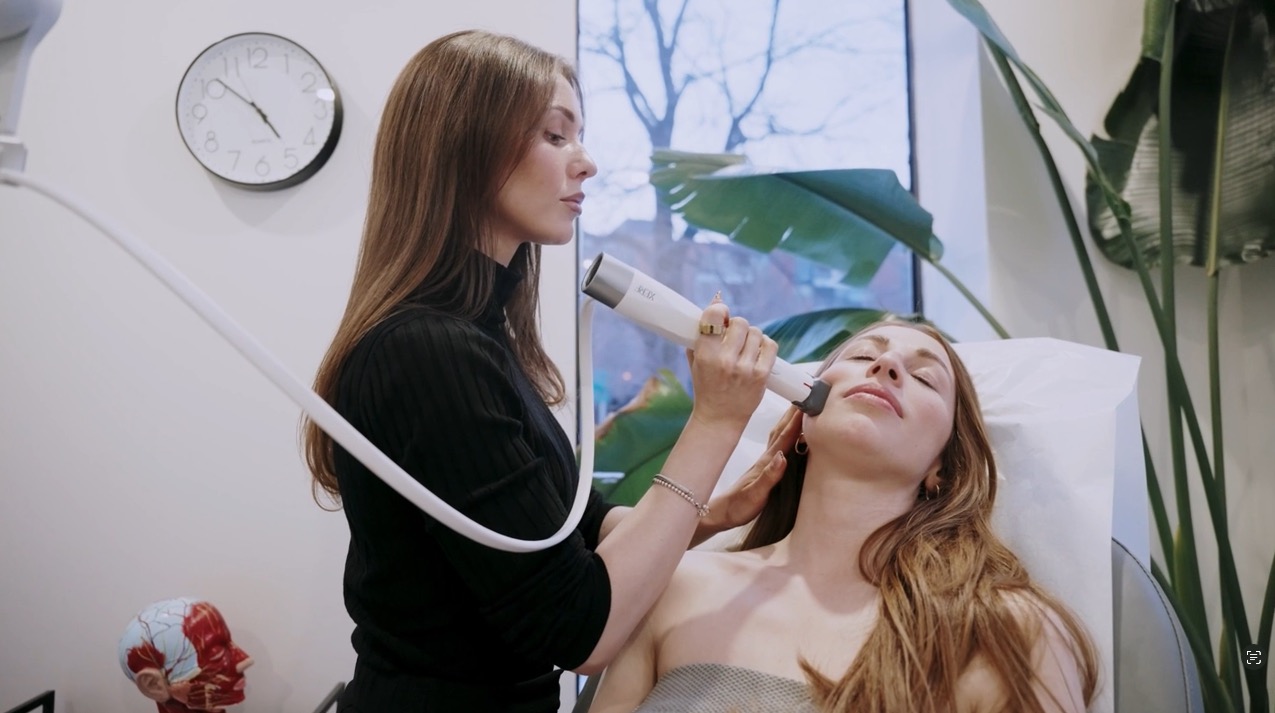

XERF: Monopolar Radiofrequency, explained
Skin laxity sits in an awkward zone in aesthetic medicine. Too mild to consider surgery, too real to fix with a cream.
That's exactly the space radiofrequency works in. Here's how it functions, and what makes XERF specific.
The principle: heat to rebuild
Your skin contains a network of collagen and elastin that gives it firmness. Over time, that network degrades — the process starts earlier than most people think and accelerates with sun exposure, smoking and chronic inflammation.
Radiofrequency uses electromagnetic energy to raise the temperature of deeper skin layers while keeping the surface comfortable. Once a certain thermal threshold is reached, two things happen: existing collagen fibres contract, then the body triggers a repair response that stimulates new collagen production over several months.
The immediate effect comes from contraction. The lasting effect comes from rebuilding.
Monopolar: why it matters
Not all radiofrequency reaches the same depth.
In bipolar radiofrequency, current travels between two closely spaced electrodes on the applicator. Energy stays concentrated near the surface — useful for texture, limited for support.
In monopolar radiofrequency, current travels between the applicator and a return electrode placed on the body. It therefore passes deep through tissue before returning. That configuration is what allows it to reach the layers where laxity actually lives, particularly the subcutaneous connective tissue.
XERF is a monopolar device.
What "multi-frequency" adds
Skin thickness isn't uniform. The lower eyelid and the submental area differ in both density and thermal tolerance.
A single-frequency device treats all those zones the same way. XERF modulates several frequencies to target superficial, mid and deep layers, and its Wave Fit technology adapts each pulse to the thickness of the tissue being treated.
In practice: more precision on delicate areas, more power where the skin allows it.
Comfort
It's the first question we get, so let's answer it plainly.
XERF requires no needles and no anaesthesia. The dominant sensation is deep warmth, generally well tolerated, with brief peaks of stronger heat.
Two elements support that comfort:
Integrated Cryogen Delivery (ICD) — built-in cooling that continuously controls skin surface temperature during the session, protecting the epidermis while heat works below.
WaveFit Pulse — energy distribution that softens sensation peaks.
Tolerance varies from person to person. Settings are adjusted during the session based on your comfort.
Who XERF works well for
Mild to moderate laxity of the face and neck
A tired-looking eye area and early upper-lid heaviness
Loss of jawline definition, early jowling
Fine lines and general loss of elasticity
Skin that no longer "bounces back," without significant excess
Who XERF doesn't work for
This section matters more than the previous one.
Radiofrequency tightens and stimulates; it does not remove tissue. Where there's significant skin excess or advanced laxity, no device replaces surgery. Claiming otherwise would be dishonest.
XERF also doesn't correct pigment concerns or vascular redness — those are different mechanisms, addressed by different technologies.
Some conditions are contraindications: a pacemaker or implanted electronic device, pregnancy, metal implants in the treatment area, certain active skin conditions. Your consultation assessment confirms eligibility.
Protocol and durability
Number of sessions — generally two following consultation, depending on the degree of laxity and your goals.
Timeline — you'll usually feel a sensation of firmness right after the session. Meaningful results build over three to six months as collagen remodels. Radiofrequency is a patient treatment: it isn't judged in the week that follows.
Maintenance — every 12 to 24 months depending on age, genetics and lifestyle. Newly formed collagen ages too.
Downtime — minimal. Light redness is possible for a few hours. You resume activities immediately.
The device is Health Canada authorized.
XERF or another technology?
There's no best device in the abstract — only a best device for a given indication.
Radiofrequency microneedling combines controlled perforation with heat. It works strongly on texture, scarring and pores, with more noticeable recovery.
Microneedling alone addresses texture and renewal, without deep thermal action.
XERF targets support and firmness, with minimal downtime.
These approaches are often complementary rather than competing. The recommended sequence depends on your assessment.
Frequently asked questions
How long is a session? Around 45 minutes depending on the treatment area.
When can I return to normal activity? Immediately.
Does it hurt? No. The sensation is sustained warmth. Integrated cooling and pulse modulation are designed to maintain comfort throughout.
How many sessions will I need? Generally two, though the number varies with your skin and your goals. Your plan is set at consultation.
Can I combine XERF with other treatments? Often yes, with appropriate spacing. That sequencing is part of your personalized plan.
Book
XERF is open to direct booking. If you're weighing several technologies, a Consultation 360 will determine which one actually fits your situation.